
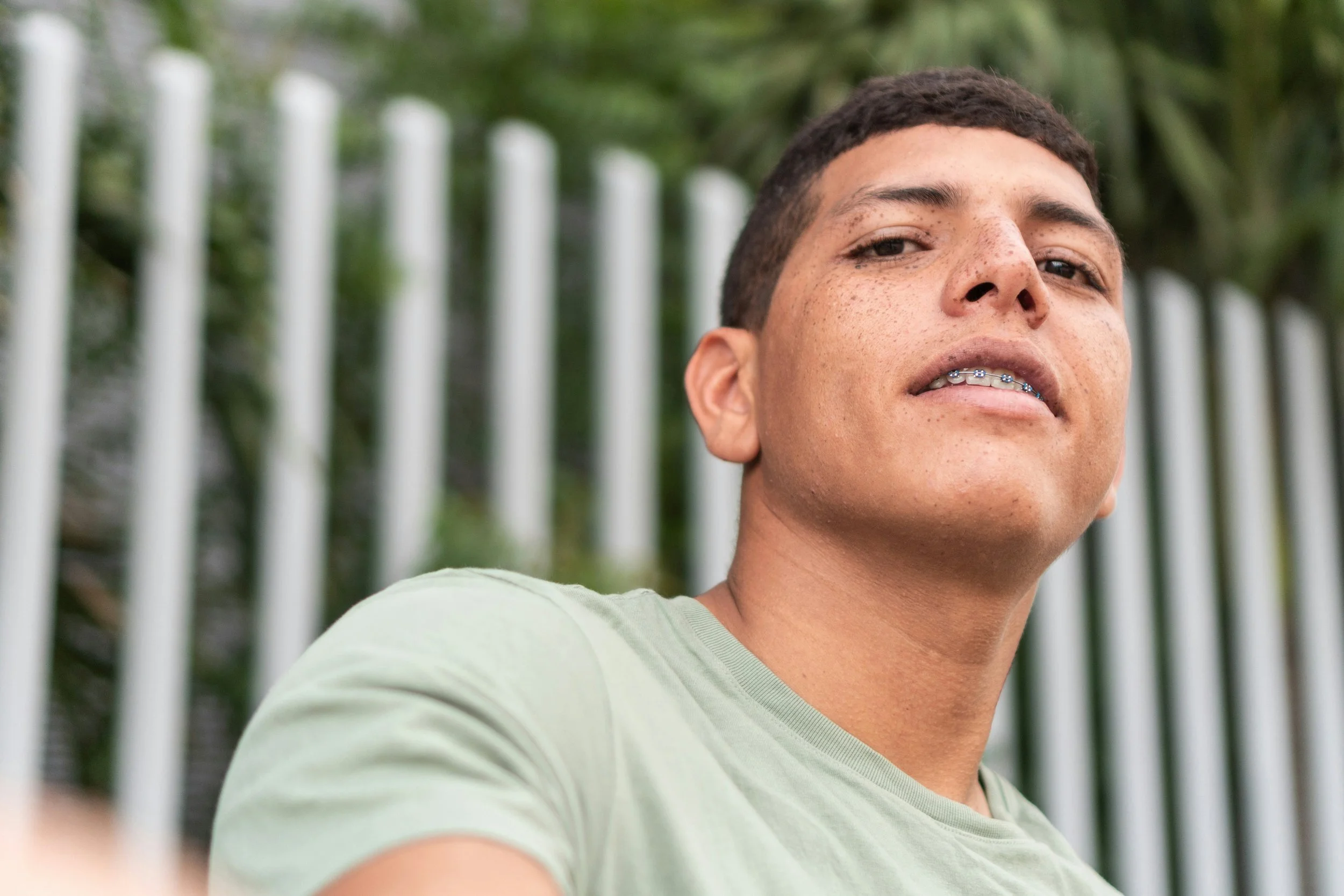
Overjet & Protruding Front Teeth in Las Vegas
If the front teeth visibly stick out, that is an overjet — and it is the bite pattern most associated with dental injury.
Overjet, not overbite
Overjet is the horizontal distance between the upper and lower front teeth. Some is normal — around two millimetres. When the upper teeth sit well ahead of the lowers, that gap becomes visible, and it is what most people mean when they say buck teeth.
Nearly everyone calls this an overbite. It is not. Overbite is the vertical overlap; overjet is the forward projection. The distinction matters because they are caused by different things and treated differently, and a page that conflates them will send you down the wrong path. More on overbite.
Overjet is also the bite pattern with the clearest safety argument for treating it, which is why orthodontists tend to raise it early even when a family has only mentioned appearance.
What causes protruding front teeth
Jaw relationship
Most commonly the upper jaw sits forward relative to the lower, or the lower jaw is set back. This is skeletal, largely inherited, and becomes apparent during growth.
Thumb and finger sucking
Sustained sucking past around age five applies steady forward pressure to the upper front teeth during the years the arch is forming. It is one of the few genuinely preventable causes.
Prolonged pacifier or bottle use
The same mechanism, and the same window. Most children who stop early recover without any intervention at all.
Tongue thrust
A swallowing pattern where the tongue pushes forward against the front teeth thousands of times a day. Light force applied constantly moves teeth — that is exactly how braces work.
Mouth breathing
Chronic mouth breathing, often linked to enlarged tonsils or adenoids, changes resting tongue position and can affect how the upper arch develops.
Missing lower teeth
Where lower teeth are absent or lost, the upper front teeth can drift forward into the space over time.
The reason we raise this early
Substantially higher injury risk
Protruding upper front teeth are markedly more likely to be chipped, fractured or knocked out in a fall or collision. In children the front teeth are already the most commonly injured, and overjet compounds it.
A lost permanent tooth is a lifetime problem
A front tooth lost at eleven means implants, bridges or crowns replaced repeatedly across sixty years, at a cost that dwarfs orthodontic treatment.
Lips may not close at rest
Where the gap is large, closing the lips takes conscious effort. That contributes to dry mouth, gum inflammation around the exposed teeth, and mouth breathing.
Difficulty biting into food
Front teeth that do not meet cannot shear properly, so biting into an apple or a sandwich becomes awkward.
It is highly visible
We do not lead with appearance, but overjet is the pattern children are most likely to be teased about, and that is a legitimate reason to treat.
How overjet is treated
What is achievable depends heavily on whether growth is still available. This is why the timing of an evaluation matters.
In children
If a habit is driving it, addressing the habit early often resolves the problem entirely with no braces at all. Where the cause is skeletal, functional appliances during growth can encourage the lower jaw forward. Given the injury risk, this is a case where earlier intervention is genuinely justified rather than upsold.
In teenagers
Braces with elastics, or a Herbst-type appliance where the lower jaw needs advancing. Growth is often still available in early adolescence, which meaningfully widens what can be achieved without surgery.
In adults
Braces or aligners can retract the upper front teeth in mild to moderate cases, sometimes with extractions to create room. Large skeletal discrepancies in a fully grown adult may require orthognathic surgery, and we will say so directly rather than attempting a compromise that will not hold.
Overjet FAQ
Are buck teeth an overbite or an overjet?
An overjet. Overjet is the horizontal distance the upper front teeth sit ahead of the lower ones. Overbite is the vertical overlap. Almost everyone uses overbite for both, but protruding teeth are specifically overjet.
Will thumb sucking cause protruding teeth?
It can, if it continues past around age five while the arch is still forming. Most children who stop before then see no lasting effect. If your child is still sucking a thumb at six or seven, an evaluation is worthwhile — addressing the habit early often prevents the problem entirely.
Does an overjet increase the risk of injury?
Yes, substantially. Protruding upper front teeth are considerably more likely to be chipped, fractured or knocked out in a fall or collision. That injury risk is the strongest clinical argument for treating overjet, particularly in children who play sport.
Can Invisalign fix protruding front teeth?
Mild to moderate overjet, often yes. Large overjet, particularly where it is skeletal rather than dental, is generally handled better with fixed braces and auxiliaries. A 3D scan determines which yours is.
At what age should protruding teeth be treated?
An evaluation by age seven is recommended, and overjet is one of the situations where early intervention is genuinely warranted rather than optional — both because growth can be guided and because the injury risk is present now.
Do protruding teeth need extractions?
Sometimes, in adults with significant overjet and no growth left to work with, removing premolars creates the room to retract the front teeth. It is not a first resort and Dr. Beth will explain the reasoning in full before recommending it.
Should my child wear a mouthguard while we wait for treatment?
Absolutely, and we would encourage it for any sport with contact. Protruding teeth are exactly the situation a custom mouthguard is protecting against.
Find out what is actually going on — free.
An hour with Dr. Beth, a 3D scan, and a straight answer about whether treatment is warranted, when, and what it would cost. Including “not yet” where that is the honest answer.