
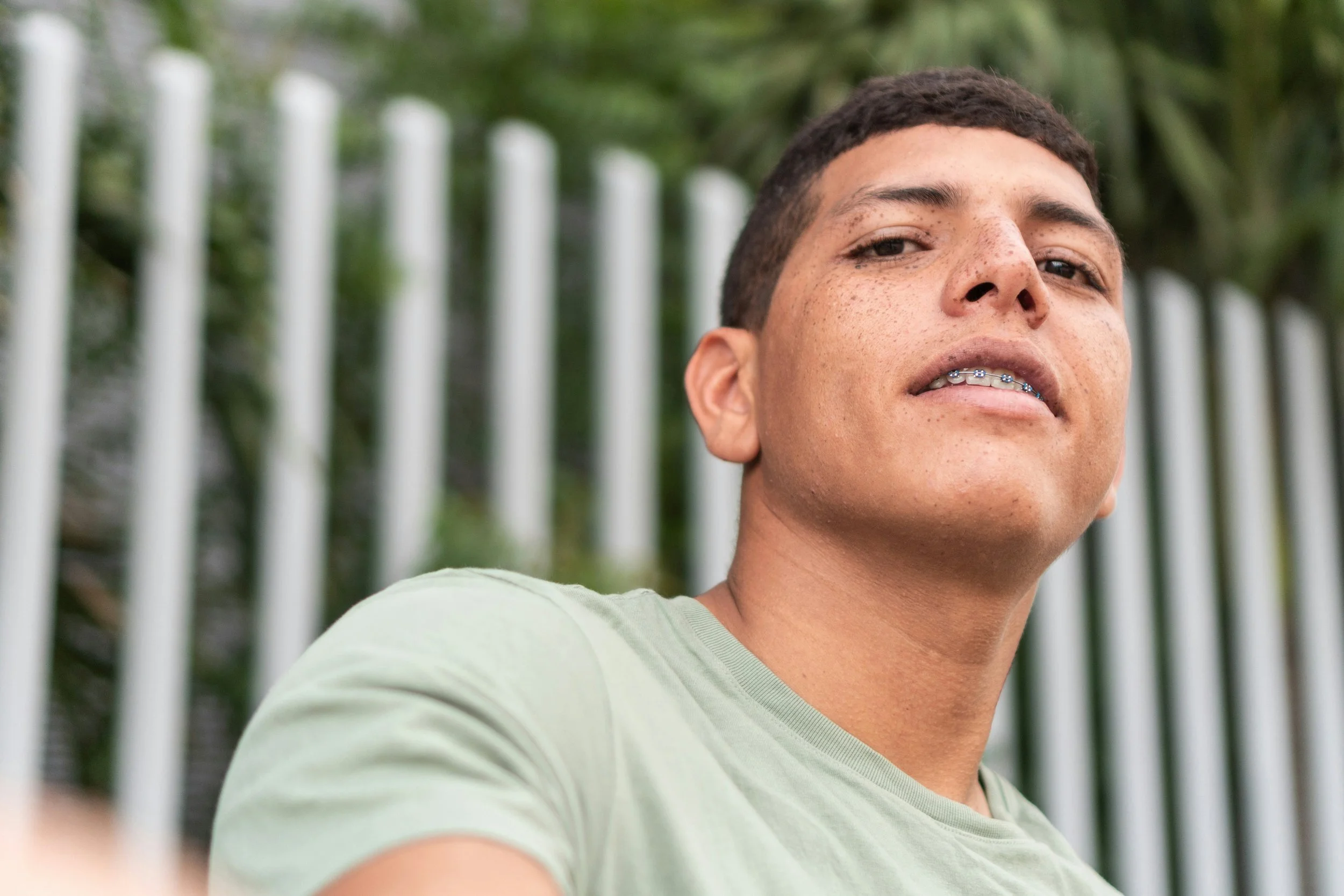
Custom Mouthguards in Las Vegas & Henderson
Made from a 3D scan of your own teeth — including over braces, which the drugstore kind cannot do safely. Fitted for athletes of any age.

Why a mouthguard is not optional in contact sport
A knocked-out or fractured front tooth is one of the few dental injuries with genuinely lifelong consequences. A permanent tooth lost at fourteen means implants, bridges or crowns for the next sixty years, replaced several times over, at a cost that dwarfs anything orthodontic.
Mouthguards work by spreading impact force across a wider area and cushioning the teeth from each other and from whatever hit them. Their protective effect against dental and soft-tissue injury is well established, which is why most organised contact sports mandate them.
One honest caveat, since you will see it claimed elsewhere: the evidence that mouthguards prevent concussion is not strong. They protect teeth, lips and jaw. Treat concussion protection as a separate matter handled by helmets, coaching and protocol — not as a reason to buy a mouthguard.
Do not use a boil-and-bite guard over brackets
This is the single most important thing on this page, and most parents do not know it.
A boil-and-bite guard works by softening in hot water and moulding tightly around the teeth. Do that over braces and it moulds around the brackets — locking onto them. Removing it can pull brackets off, bend the archwire or damage the appliance, and it can be genuinely difficult to get out at all.
Worse, it defeats the point. A guard gripping the brackets transmits impact force directly into them and into the teeth beneath, rather than distributing it.
An orthodontic mouthguard is built differently. It has a channel with clearance over the bracket line, so it sits on the teeth without engaging the appliance, and it accommodates the fact that your teeth are moving. We make these for our own patients and for people treated at other practices.
With aligners it is simpler. Take the aligners out, wear a normal custom mouthguard, then put the aligners back in afterwards. Never wear a mouthguard over aligners — and count that time toward your daily total, since it is time out.
Stock, boil-and-bite, or custom?
| Stock | Boil-and-bite | Custom-made | |
|---|---|---|---|
| Fit | Generic, loose | Approximate | Exact, from your scan |
| Stays in place | Requires clenching | Mostly | Yes, without effort |
| Breathing & speech | Noticeably impaired | Some interference | Minimal |
| Actually worn | Often not | Sometimes | Consistently |
| Safe over braces | No | No — can debond brackets | Yes, purpose-built |
| Thickness where it matters | Uniform, thin | Thins out over front teeth | Controlled by design |
| Cost | Lowest | Low | Higher |
The compliance point is the whole argument. A guard that makes it hard to breathe or talk gets left in the bag, and a mouthguard in a bag protects nothing. Custom guards get worn because they are unobtrusive enough to forget about — which is the only property that matters on the field.
How we make yours
A quick scan — no impressions
We use our iCAT FLX and digital scanning rather than a tray of impression material. It takes a few minutes, nothing sets in your mouth, and children generally prefer it considerably.
Design for the sport
Thickness and coverage are chosen for what you actually play. Wrestling and martial arts need different protection from basketball. If you are in braces we build in bracket clearance and allow for tooth movement.
Fabricated to your model
Made from your own scan rather than an average arch, which is why it seats without clenching and does not obstruct speech.
Fitted and checked
You try it in, we check retention, bite and comfort, and adjust the borders if anything rubs. Talk and breathe with it in before you leave.
Reviewed as things change
Growing children and patients mid-treatment both change shape. We check fit at your regular appointments and remake when it stops seating properly.
Sports where we fit them most
Football & wrestling
Mandated at nearly every level, and for good reason. Wrestling in particular produces a high rate of facial contact, and a properly retained guard matters more than in sports where you can clench through a play.
Basketball & soccer
Not always mandated, and among the highest sources of dental injury we see — elbows and heads at face height, no helmet, and constant close contact.
Martial arts & boxing
Direct facial impact is the point of the sport. Custom fit matters most here, since a guard that shifts on impact is worse than useless.
Skateboarding & BMX
Rarely thought of as mouthguard sports, and a common source of front-tooth fractures in the valley. Worth considering for anyone riding regularly.
Baseball & softball
Batted balls, thrown balls and collisions at base. Catchers and infielders are the highest risk, though the guard is cheap insurance for anyone on the field.
Volleyball & lacrosse
Both produce more facial contact than people expect. Lacrosse mandates guards; volleyball generally does not, which does not mean the risk is absent.
If your child plays a CCSD or club sport and you are unsure whether a guard is required, check with the coach — and get one regardless. Requirements track liability rules, not injury risk.
Care, storage and when to replace
Rinse before and after every use, then brush gently with a soft toothbrush and cool water. Let it air-dry completely before it goes in the case — a damp guard in a sealed case grows bacteria quickly, which is where the smell comes from.
Never hot water, never the dishwasher, never a hot car. This is Las Vegas, and a mouthguard left on a dashboard in July is finished. Heat warps the material permanently and a warped guard neither fits nor protects.
Use a vented case, not a plastic bag or the bottom of a sports bag. Vented cases let it dry and stop it being crushed.
Replace it when it stops fitting. Growing children often need a new one each season. Patients in braces need remakes as teeth move. Anyone should replace a guard that is torn, thinned through, or no longer stays put without clenching — chewing on a guard, which most athletes do, wears it out faster than impact ever will.
Mouthguard FAQ
Can I wear a regular mouthguard over braces?
No. Boil-and-bite guards mould around the brackets themselves, which can pull brackets off, bend the wire or become very difficult to remove. They also transmit impact straight into the appliance rather than distributing it. An orthodontic mouthguard has clearance over the bracket line and accommodates teeth that are moving.
Do I need a mouthguard with Invisalign?
Aligners are not mouthguards and offer no impact protection. Remove them, wear a normal custom mouthguard, and replace the aligners afterwards. Never wear a guard over aligners, and count the time out toward your daily wear total.
How much does a custom mouthguard cost?
Considerably less than treating a fractured or knocked-out front tooth, which is the comparison that matters. It costs more than a drugstore guard. Call (702) 706-2468 for a current figure — it depends on whether you are in braces and how the guard needs to be built.
Does insurance cover mouthguards?
Some dental plans include a benefit for athletic mouthguards, often for dependent children, though many do not. We can check your plan when you call. Mouthguards are also generally an eligible FSA and HSA expense.
How long does a custom mouthguard last?
For an adult whose teeth are not moving, often several seasons. For a growing child, frequently one season. For a patient in braces, it needs remaking periodically as the teeth move. Replace it whenever it is torn, thinned through, or no longer stays in without clenching.
Do mouthguards prevent concussion?
The evidence for that is not strong, and we would rather say so than repeat a common marketing claim. Mouthguards clearly protect teeth, lips, tongue and jaw. Concussion risk is managed through helmets, coaching, technique and return-to-play protocol, not through a mouthguard.
Upper only, or upper and lower?
An upper guard is sufficient for most athletes. We recommend both arches when there are lower braces, in sports with heavy direct facial impact, or where a specific bite pattern means the lower teeth are exposed. Dr. Beth will advise at the fitting.
Can you make one if I am not your orthodontic patient?
Yes. We fit custom mouthguards for athletes who have never had orthodontic treatment, and orthodontic mouthguards for patients wearing braces fitted at another practice. Call the office and we will arrange a scan.
Before the season starts, not after the injury.
A few minutes to scan, and a guard built to your teeth — braces or no braces. We fit them for our own patients and for athletes treated elsewhere.