
Orthodontic Questions, Answered
Fifty-four of the questions we actually get asked, answered properly rather than in one line. Search below, or jump to a section.

All questions
Nothing matched that. Try a different word — or just call us on (702) 706-2468 and ask a human.
Getting started
What happens at my first visit?
Your consultation takes about an hour and it is free. We take clinical photos and a 3D iCAT scan, then Dr. Beth examines your bite and reviews the scan with you on screen. You leave with a written treatment plan, a projected timeline and the exact fee for your case — not a range.
Nothing is decided that day unless you want it to be. Plenty of people go home and think about it.
Do I need a referral from my dentist?
No. A referral is not required in Nevada and it will not change your fee. You can book a free consultation directly, online or by calling (702) 706-2468. Many of our patients are referred by their general dentist, but plenty simply book themselves.
Is the consultation really free?
Yes, and that includes the diagnostic work: photos, the 3D iCAT scan, Dr. Beth’s exam and your written plan with fees. There is no charge and no obligation. If you decide not to proceed, you owe nothing and nobody will chase you.
What is the difference between an orthodontist and a dentist?
Both complete dental school. An orthodontist then completes an additional accredited residency — three years in Dr. Beth’s case — devoted entirely to tooth movement, jaw growth and bite correction.
General dentists may offer aligners. Orthodontists practise tooth movement exclusively. For straightforward cases the difference may not matter much; for complex bites it matters a great deal.
How long does orthodontic treatment take?
Most Invisalign cases finish in six to eighteen months. Comprehensive braces generally run eighteen to twenty-four months. An early Phase 1 course for children is usually nine to eighteen months. Dr. Beth gives you a projected timeline in writing, based on your actual scan rather than an average.
Can I start treatment the same day as my consultation?
Often, yes. If you are getting metal or clear braces and your dentist has cleared you, we can bond brackets the same day. For Invisalign we take the lab scan that day and your first aligners arrive about four weeks later.
Can I get a second opinion?
Absolutely, and any orthodontist worth seeing will say the same without taking offence. If you want your records to take elsewhere, ask and we will provide them. This is particularly reasonable for early treatment recommendations, where two phases cost more than one.
Treatment options
What treatment options do you offer?
Traditional metal braces, clear ceramic braces, lingual braces placed behind the teeth, Invisalign clear aligners, early (Phase 1) treatment for children, and retainers. We plan every case using iCAT FLX 3D imaging.
See all treatment options for how each one works.
Is Invisalign as effective as traditional braces?
For mild to moderate crowding, spacing and bite issues, the outcomes are comparable. Not every case qualifies, though. Significant rotations, large gaps and substantial bite corrections are often handled better and faster with fixed braces.
Dr. Beth confirms candidacy using the 3D scan, and she will tell you plainly if aligners are the wrong tool for your bite.
What are lingual braces?
Brackets bonded to the tongue side of your teeth rather than the front, so nothing shows when you smile. They handle more complex movement than aligners and require no compliance, since they are fixed. Speech takes a week or two to adjust, and not every case is suitable.
How are clear ceramic braces different from metal?
Mechanically they work identically. The brackets are tooth-coloured rather than steel, so they blend into the enamel and are far less noticeable at conversational distance. They are slightly more fragile, and you will want to go easy on heavily staining foods and drinks.
How do I know which option is right for me?
That is genuinely what the consultation determines. Dr. Beth recommends based on three things: what your bite actually requires, how visible you are willing for treatment to be, and how realistic compliance is for you. Aligners only work if they are worn twenty hours a day, so we will be direct if that seems unlikely.
How is this different from mail-order aligners?
An orthodontist examines you, scans your roots and supporting bone in three dimensions, checks gum health before starting, and adjusts the plan when a tooth does not track as predicted. Mail-order companies do none of that, which is why they accept cases they should decline.
The price gap narrows considerably once corrective treatment is needed.
Kids & teens
At what age should my child first see an orthodontist?
By age seven, per the American Association of Orthodontists. By then the first molars and incisors have usually arrived, which lets an orthodontist read the bite relationship and whether there will be room for the permanent teeth still to come.
Most seven-year-olds do not need treatment. The visit is diagnostic, and “come back in eighteen months” is the most common outcome.
What is Phase 1 treatment, and does my child need it?
Phase 1 is a short, targeted course for children roughly six to ten, addressing one specific developmental problem while the jaw is still growing. Most children do not need it — the majority need only one course of treatment, in their teens.
We recommend it when there is a clear clinical reason, such as a crossbite, underbite or severe crowding. More on early treatment.
What signs suggest my child should be seen sooner?
A crossbite, an underbite, front teeth that protrude noticeably, baby teeth lost very early or retained very late, thumb sucking past age five, difficulty chewing, or a jaw that visibly shifts to one side to close. Any of these are worth an evaluation rather than waiting for the next check-up.
Does a palatal expander hurt?
Children usually report pressure rather than pain, mostly in the first few days and briefly after each turn. Eating and speech feel odd for about a week and then normalise. Most kids adapt considerably faster than their parents expect.
Will my teenager actually wear their aligners?
Invisalign Teen includes compliance indicators that fade with wear, so you can see whether they are being worn rather than relying on an answer at dinner. It also comes with free replacement aligners if one is lost, which happens.
If we think compliance is genuinely unlikely, we will recommend fixed braces instead. That is the kinder recommendation, even if it is not the one your teen wants.
Can my child play sports with braces?
Yes, with a mouthguard. We fit orthodontic mouthguards designed to sit over brackets rather than the standard boil-and-bite type, which does not fit properly over braces. With aligners, take them out and wear a normal mouthguard.
Will appointments interrupt school?
We reserve early-morning and after-school slots specifically for school-age patients. Adjustments are short. Tell us your family’s schedule at the consultation and we will book around it rather than around us.
Adults
Am I too old for braces or Invisalign?
No. The biological process that moves teeth continues throughout life, so there is no upper age limit. Adult bone is denser than a teenager’s, which can make treatment run somewhat longer, but results are equally stable. Gum and bone health matter far more than age.
Roughly one in four orthodontic patients today is an adult.
My teeth shifted after braces years ago. Can that be fixed?
Yes, and it is one of the most common reasons adults come in. Relapse after retainer wear stops is entirely normal and nothing to be embarrassed about. Because the teeth were once in position, corrective treatment is often shorter and simpler than the original course.
Can I have treatment with crowns, implants or missing teeth?
Usually, though it changes the planning. Implants are fused to bone and cannot be moved, so they become fixed reference points the plan works around. Crowned teeth move normally. Dr. Beth maps all of this from your 3D scan and coordinates with your general dentist where needed.
What if I have gum disease?
It needs treating first. Orthodontics relies on healthy gums and bone to move teeth safely, and moving teeth through compromised tissue can accelerate bone loss. Dr. Beth will tell you this at the consultation rather than starting and hoping. Working alongside your dentist or periodontist is routine here.
Will treatment affect my speech?
Aligners cause a slight lisp for the first few days that resolves as your tongue adapts. Lingual braces have a more noticeable adjustment period, usually one to two weeks. Conventional braces on the front of the teeth rarely affect speech at all.
I travel constantly. Can treatment work around that?
Yes, but tell us at the consultation rather than after we have built the plan. Aligner sequences can be issued in longer batches, and appliance choices can be made with long absences in mind. Dr. Beth has planned treatment around heavy international travel before.
Cost & insurance
How much do braces or Invisalign cost?
Your total depends on two things: how long treatment runs, and how much movement your case needs. A ten-month aligner case and a twenty-four-month bite correction are genuinely different amounts of work.
Broadly, orthodontic treatment in the Las Vegas area runs somewhere between roughly $1,700 and $9,500 depending on complexity. Metal braces sit at the lower end and lingual braces at the upper end. You get an exact figure for your own case at the free consultation.
Do you offer payment plans?
Yes. We offer in-house monthly plans at 0% APR with no credit check, spread across your treatment. We also accept CareCredit. You agree your monthly figure before treatment begins and it does not change.
Is there a credit check?
Not for our in-house plan. It is not a lending product, so there is no application and nothing to be declined for — the practice is simply agreeing to be paid across your treatment, which is why it carries no interest. CareCredit, being a third-party credit product, does involve one.
Will my dental insurance cover treatment?
Many dental plans include a separate orthodontic benefit, commonly between one and two thousand dollars. It is usually a once-per-lifetime maximum rather than annual, and some plans limit it to dependent children. We verify your specific benefit before treatment starts and apply it to your total.
Which insurance plans do you accept?
Most major carriers, including Aetna, Ameritas, Anthem Blue Cross Blue Shield, Cigna, Delta Dental, DenteMax, GEHA, Humana, Liberty Dental, Lincoln Financial, MetLife, Nevada Medicaid, Principal, Renaissance, Sun Life, The Standard, United Concordia, United Healthcare, UMR, Teamsters Local 986 and Electrical Workers Local 357.
If yours is not listed, call anyway — out-of-network orthodontic benefits are often still payable.
Can I use FSA or HSA funds?
Generally yes — orthodontic treatment is typically an eligible expense under both. Many families use pre-tax dollars for part of the total and finance the remainder monthly. Check your plan documents, since rules on paying in advance for multi-year treatment vary.
Do you offer anything for families treating more than one child?
Family situations come up often here and we work with them. Bring both children to consultations and talk to us directly about coordinating start dates and payment schedules across the family.
What is included in the quoted fee?
Your records and 3D scan, all scheduled adjustment visits, and your retainers at the end. We do not quote a headline figure and then bill separately for things treatment obviously requires. Replacements for retainers lost later are charged separately.
Daily life in treatment
Does orthodontic treatment hurt?
Expect mild pressure or tenderness for a day or two after braces are placed, after each adjustment, and when switching to a new aligner. Over-the-counter pain relief is usually more than enough and it fades quickly.
Sharp or persistent pain is not normal. Call us if that happens.
What can I not eat with braces?
Avoid anything hard, sticky or chewy: ice, hard sweets, caramel, taffy, nuts, popcorn kernels and beef jerky are the usual culprits. Cut apples, carrots and corn off the cob rather than biting into them. With aligners there are no restrictions at all, because you take them out to eat.
How do I keep my teeth clean with braces?
Brush after every meal, angling the brush above and below the brackets. Use interdental brushes for the spaces between brackets and wire, and a floss threader or water flosser for between teeth. This is the part patients skip and later regret — decalcification leaves permanent white marks where plaque sat.
Can I drink coffee with my aligners in?
Take them out. Hot drinks can warp the plastic, and coffee, tea and red wine will stain the trays — which rather defeats the point of clear aligners. Water is the only thing to drink with them in.
How many hours a day must I wear my aligners?
Twenty to twenty-two. You remove them only to eat, to drink anything other than water, and to brush and floss. This is the one real demand aligners make, and treatment slows measurably when wear time slips.
How often will I need appointments?
Braces patients typically come in every four to eight weeks. Invisalign patients every six to eight weeks. The visits themselves are short — this is a small practice and it runs on time.
What do I do if a bracket breaks or a wire pokes?
Call the office. Loose brackets are common and usually fixed in a short visit. For a poking wire, orthodontic wax over the end will get you through until you can come in. If a wire has come fully out of place, do not cut it yourself unless it is causing genuine harm.
What if I lose an aligner?
Call us straight away. Depending on where you are in the sequence, we will usually have you return to the previous set or move to the next while a replacement is ordered. Do not simply go without — teeth begin drifting within days.
Do I still see my regular dentist during treatment?
Yes, and it matters more than usual. Keep your six-month cleanings throughout treatment. Braces make plaque harder to remove, so professional cleanings are doing more work than they normally would.
After treatment
What happens after my braces come off?
You move straight into retention. Retainers hold your teeth in their new positions while the surrounding bone and tissue settle. For the first year we recommend wearing them essentially full time, after which most patients switch to nights only.
How long do I have to wear a retainer?
Realistically, at night indefinitely. Teeth drift throughout life whether or not you ever had braces — it is part of normal ageing. Nightly retainer wear is a small habit that protects a substantial investment, and skipping it is the single most common reason a good result quietly comes undone.
I lost my retainer. What now?
Call quickly. Teeth begin moving within days, so the longer you wait, the more likely a replacement made from your old records will no longer fit — which means new records and a higher cost. Replacements are charged separately from your treatment fee.
Can I whiten my teeth after treatment?
Yes, and afterwards is the right order. Whitening with brackets on produces uneven results, because the enamel under each bracket is shielded. Once braces come off and the teeth have settled for a few weeks, whitening treats an even surface.
Our office
Where are you located?
9480 S. Eastern Ave, Suite 145, Las Vegas, NV 89123 — just off the 215, which puts us roughly eight to fifteen minutes from most Henderson neighbourhoods. Suite 145 is on the ground floor and parking is free directly outside.
What are your office hours?
Monday to Friday, 8:00 AM to 5:00 PM. Closed weekends. We are running a reduced schedule for a short period at the moment, so please call (702) 706-2468 ahead to confirm same-day availability.
What languages does your team speak?
English, Tagalog and German. If you would rather discuss treatment in your first language, say so when you book and we will make sure the right person is available.
Is your office accessible?
Yes. Step-free access throughout, an ADA-compliant main entrance and restroom, and accessible parking near the door.
Will I see the same orthodontist every time?
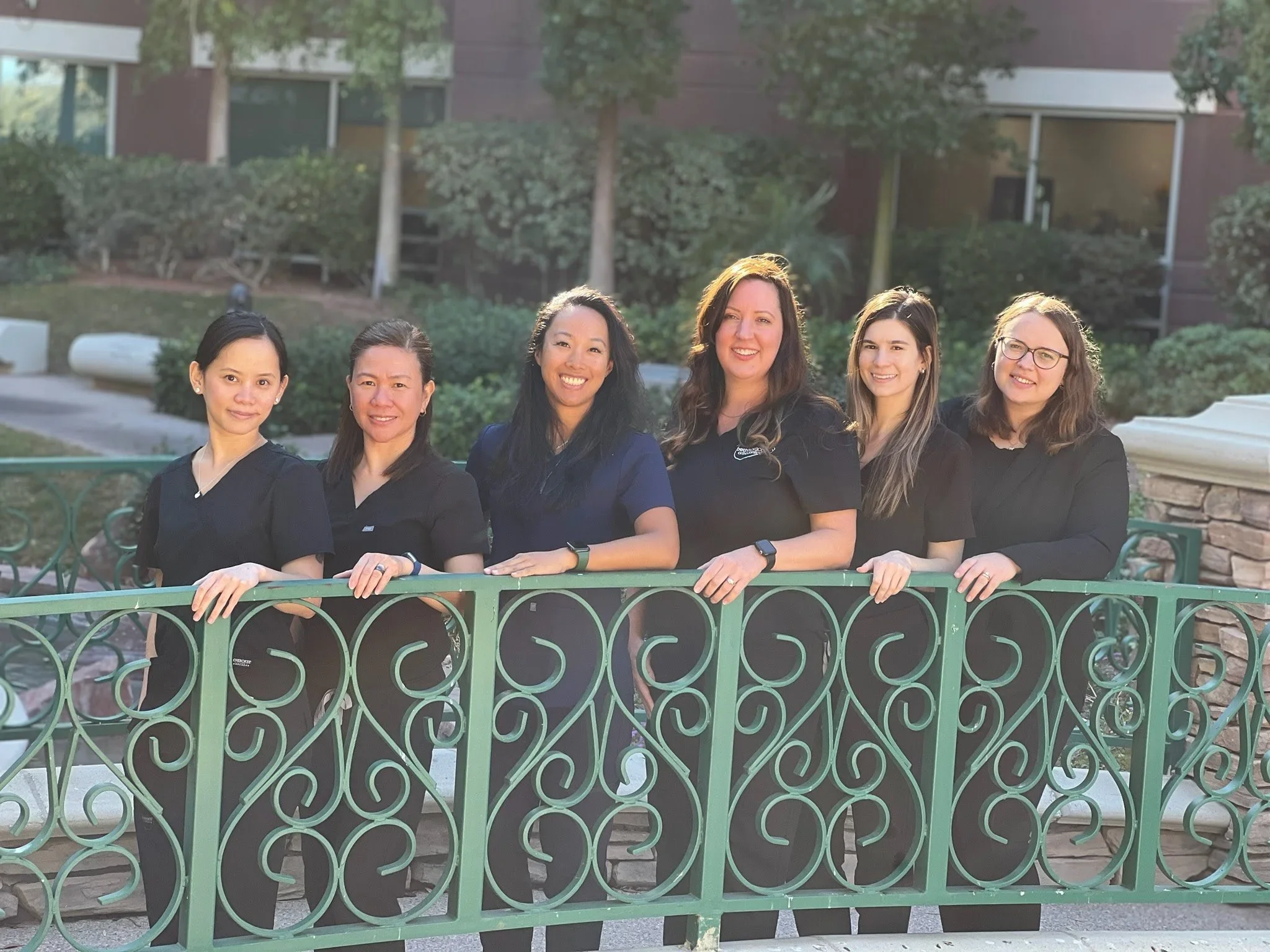
Yes. Beth’s Braces is a single practice with one orthodontist, not a group with rotating providers. The person who plans your treatment is the person who adjusts it, every visit. Meet the team.
Can I transfer my treatment from another orthodontist?
Yes, we accept transfer patients mid-treatment. Bring your records or have your previous office send them, and Dr. Beth will review where your case stands before quoting only the remaining treatment — not a full course. Moves and insurance changes happen; you should not have to start over.
What counts as an orthodontic emergency?
True emergencies are rare. Call the office for severe pain, a wire causing injury, or an appliance that has come loose. For anything involving facial trauma, a suspected fracture or a life-threatening situation, go to an emergency room or call 911 first — orthodontics can wait.
More detail on each topic
All treatment options
Braces, aligners, lingual and early treatment, with how each one works and what it suits.
Treatment overview →Costs & financing
What drives the price, how 0% APR plans and CareCredit work, and how insurance applies.
Costs & financing →Invisalign
Candidacy, timelines, attachments, and an honest comparison against fixed braces.
Invisalign →Early treatment
What Phase 1 is, the signs that warrant it, and why most children do not need it.
Early treatment →Adult orthodontics
Discreet options, relapse after teenage braces, and treatment around a working life.
Adult orthodontics →Meet Dr. Beth
Training, credentials and the team you will actually see at every appointment.
Meet the team →Still have a question?
Ask it in person. The first visit is free, takes about an hour, and you leave with a written plan and real numbers — whether or not you decide to go ahead.